
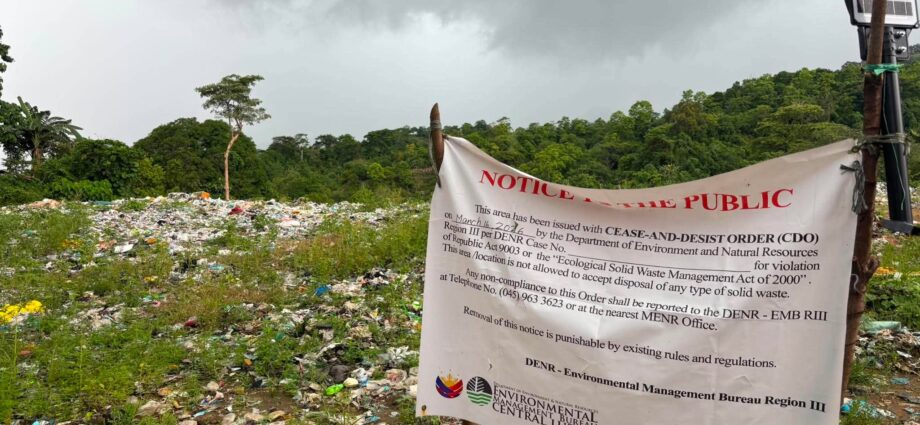
The National Commission on Indigenous Peoples (NCIP) Region III has clarified details regarding a dumpsite located within the Ayta Ambala ancestral domain in Sitio Tibag, Barangay Naugsol, Subic, following claims raised in a recent TV documentary.
After conducting a field assessment, the agency stated there was no evidence found showing that Ayta families were forcibly evicted because of the facility.
In Memorandum No. R3-2024-07-2894 (Series of 2026), signed by Regional Director Atty. Joyce Lapuz, the NCIP evaluated the former dumpsite to determine if any provisions under the Indigenous Peoples’ Rights Act (IPRA) had been violated.
According to the Barangay Naugsol Tribal Council, local indigenous leaders agreed to let the Subic municipal government use the site as a temporary dumpsite following consultations during the COVID-19 pandemic.
The NCIP noted the following during its evaluation:
- Relocation and Housing: The site was not a residential area before its use as a dumpsite. Inspectors found no evidence of destroyed houses or displaced residents.
- Proximity to Residents: Most of the community—about 87 families or 435 individuals—lives in neighboring Sitio Alibang. The few homes in Sitio Tibag sit at a safe distance from the former dumpsite, contrasting with documentary reports that houses were right next to the waste area.
- Financial Assistance: The report could not confirm details regarding a supposed ₱10,000 monthly payment to the community. Statements from residents varied on whether the money was connected to the dumpsite or was part of existing assistance provided by the local government before the facility’s setup.
The NCIP also addressed claims regarding water pollution in the area, noting that there was insufficient evidence during the visit to confirm that local streams or water sources had been contaminated.
Inspectors who visited the site on July 17, 2026, reported no foul odors or unusual swarms of flies and insects. The agency noted, along with community members, that formal water quality testing is necessary before making any final conclusions about contamination.
To address remaining concerns, the NCIP recommended the following steps:
- Site Rehabilitation: The local government of Subic should proceed with restoring the former dumpsite in coordination with the NCIP and the Ayta Ambala community to maintain transparency and protect indigenous rights.
- Proper Permits: All future projects within the ancestral domain must secure full coordination, permits, and authorization through the NCIP before starting.
- Environmental Compliance: The municipal government must ensure the rehabilitation meets standard environmental guidelines while serving the community’s best interests.