
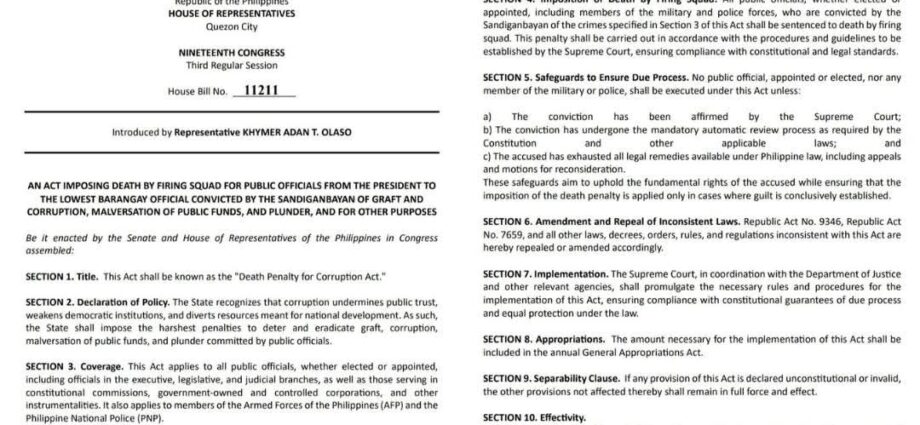
QUEZON CITY, Philippines – Representative Khymer Adan T. Olaso has introduced House Bill No. 11211, dubbed the “Death Penalty for Corruption Act,” in the 19th Congress.
The proposed legislation seeks to impose the death penalty by firing squad on public officials, from the President to barangay officials, convicted of graft, corruption, malversation of public funds, and plunder.
Key Provisions of the Bill
The bill highlights the urgency to combat corruption, which it identifies as a significant threat to public trust, democratic institutions, and national development. It aims to deter corrupt practices by imposing the “harshest penalties” on offenders.
Under Section 3, the bill outlines its scope, covering all public officials—whether elected or appointed—including members of the military and police forces. Those convicted by the Sandiganbayan for graft and corruption (as defined under Republic Act No. 3019), malversation of public funds (as defined under the Revised Penal Code), and plunder (under Republic Act No. 7080) will face execution by firing squad.
Safeguards for Due Process
To ensure fairness, Section 5 mandates several legal safeguards before the death penalty is carried out. These include:
Supreme Court affirmation of the conviction, mandatory automatic review as required by law, and exhaustion of all legal remedies, including appeals and motions for reconsideration.
These provisions aim to uphold the accused’s fundamental rights and ensure penalties are applied only when guilt is conclusively established.
Implementation and Effectivity
The Supreme Court, alongside the Department of Justice, will promulgate the necessary guidelines to implement the law in compliance with constitutional guarantees. If passed, the law will take effect 15 days after publication in two newspapers of general circulation or in the Official Gazette.
A Step Toward Reform or Controversy?
The proposal is expected to spark debate, particularly regarding its alignment with human rights standards and international treaties. Critics of the death penalty may question whether such measures effectively curb corruption or undermine human dignity.
If approved, this measure would mark a significant shift in the Philippines’ anti-corruption efforts, sending a stern warning to those in public service about the consequences of abusing their positions for personal gain.