

Construction of the Metro Manila Subway’s station at the Ninoy Aquino International Airport (NAIA) Terminal 3 has officially begun, marking a major step toward establishing a direct underground rail connection to one of the country’s busiest gateways.
President Ferdinand Marcos Jr. led the groundbreaking ceremony on Wednesday, September 16, for the NAIA Terminal 3 station and its connecting tunnels. The project is expected to improve access between the airport and major areas of Metro Manila while reducing dependence on road travel.
The 2.413-kilometer station and tunnel package, identified as Contract Package 109 (CP109), will use a Japanese engineering technique known as underpinning. The method will allow existing expressway piers to remain supported while subway tunnels are constructed beneath and around the existing infrastructure.
The government said the station’s entire right-of-way has already been secured, clearing a key requirement for construction. The land involved was secured through coordination among the Department of Public Works and Highways, Bases Conversion and Development Authority, Manila International Airport Authority, New NAIA Infra Corp., and the Pasay City government.
Marcos said modernizing the country’s railway network is a priority of his administration, particularly as Metro Manila continues to face heavy traffic.
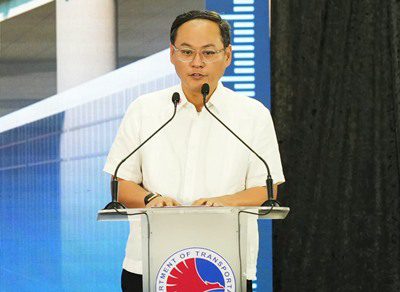
The Department of Transportation said the NAIA T3 station represents an important milestone because it will provide a subway connection directly serving the airport. DOTr Secretary Giovanni Lopez also said the full Metro Manila Subway remains targeted for completion in the last quarter of 2031.
Japanese Embassy chargé d’affaires a.i. Ono Osho said the airport connection could help shorten travel times and ease road congestion while strengthening Manila’s links with other major Asian cities.
Pasay City Mayor Imelda Calixto-Rubiano, meanwhile, said the station could give arriving travelers another introduction to the city and the country as the airport’s surrounding areas continue to develop.
Once the entire 33-kilometer Metro Manila Subway is operational, the government expects travel between Valenzuela City and NAIA Terminal 3 to take about 40 minutes, compared with the current estimated travel time of around one hour and 10 minutes.
Funded by the Japan International Cooperation Agency, the subway will have 17 stations and is projected to carry about 70,000 passengers daily at the NAIA Terminal 3 station by 2035. Ridership at the station is expected to reach approximately 74,000 passengers per day by 2045.
The start of construction brings the airport segment closer to becoming part of a broader underground rail network designed to connect key destinations across Metro Manila and provide commuters and travelers with an alternative to increasingly congested roads.