
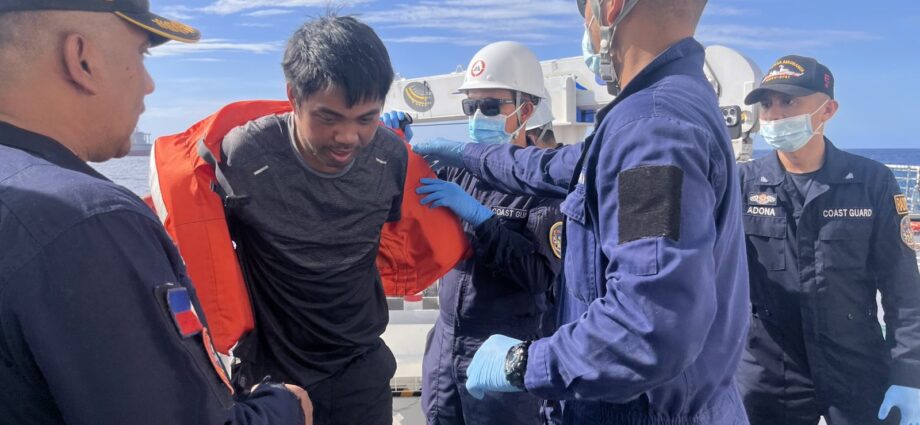
The Philippines is moving to strengthen its ability to respond to people in distress at sea after the Senate unanimously concurred in the country’s accession to the International Convention on Maritime Search and Rescue (SAR Convention), 1979.
Seventeen senators voted in favor of the accession on September 21, according to the Philippine Coast Guard (PCG), advancing the country’s formal participation in an international framework for coordinating maritime search-and-rescue operations.
President Ferdinand Marcos Jr. signed the Instrument of Accession on June 25, paving the way for Senate concurrence.
For Filipinos who depend on boats and ships to travel, work or transport goods, the move is expected to strengthen coordination when maritime emergencies occur.
The SAR Convention, adopted under the International Maritime Organization, provides an international framework for receiving distress alerts, coordinating rescue missions, maintaining rescue coordination centers and allowing countries to assist one another during emergencies at sea.
The Philippine Coast Guard said the system is particularly significant for the Philippines, an archipelago of more than 7,000 islands with more than 36,000 kilometers of coastline.
“When a fisherman goes missing or a passenger vessel encounters an emergency, we need a search and rescue system that can respond and coordinate effectively,” PCG spokesperson Commodore Noemie Cayabyab said.
She said stronger coordination would give responders clearer procedures and improve cooperation across Philippine maritime areas, including the West Philippine Sea.
The accession also reinforces the Philippines’ obligations as a coastal state under the United Nations Convention on the Law of the Sea (UNCLOS) to maintain adequate and effective search-and-rescue services and cooperate with neighboring countries.
PCG Commandant Admiral Ronnie Gil Gavan said the move would help strengthen protection for Filipino seafarers traveling internationally, as well as Filipinos and foreign visitors who rely on maritime transportation within the country.
For the public, the practical impact of the convention lies in having established mechanisms for countries and maritime authorities to work together when lives are at risk.
A distress call from a vessel, a missing fisherman or an emergency involving passengers can require assistance beyond the immediate area of the incident. International search-and-rescue arrangements provide a framework for authorities to coordinate resources and respond across maritime boundaries.
The PCG said the Philippines’ accession also strengthens its integration with the international maritime community as the country takes on a leading role in ASEAN this year.
The Senate action comes 47 years after the convention was adopted, marking a significant step toward bringing the Philippines’ maritime search-and-rescue framework in line with international arrangements.
Ultimately, the measure is intended to translate international cooperation into a more coordinated response when people are in danger at sea—an important consideration for a country where millions depend on maritime routes for transportation, livelihoods and tourism.