
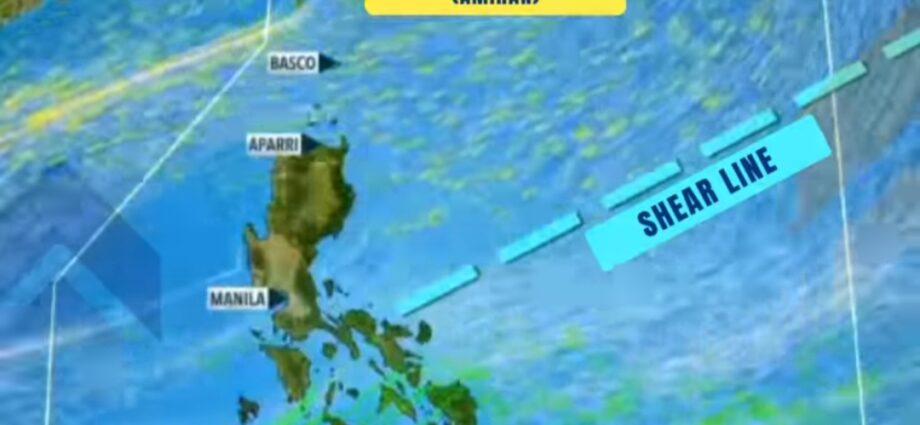
The Office of Civil Defense (OCD) is considering the establishment of a dedicated warning system for weather phenomena such as shear line, following a recommendation from Undersecretary Ariel Nepomuceno. This initiative aligns with President Ferdinand R. Marcos, Jr.’s directive for a whole-of-government approach to disaster preparedness, as emphasized by NDRRMC Chairman and Defense Secretary Gilberto Teodoro, Jr.
In a recent interview on the Civil Defense in Action program, OCD spokesperson Director Chris Noel Bendijo highlighted the preliminary nature of the initiative.
“The goal of Usec. Ariel is to create an alert system that not only informs the public but also clearly identifies the type of disaster. We need to avoid confusion—if there’s a tsunami, people must know not to go to low-lying areas,” Bendijo explained.
Why a Shear Line Warning System is Necessary
Bendijo emphasized that shear lines can be even more dangerous than tropical cyclones due to their intense and localized rainfall.
“Our administrator, Usec. Ariel Nepomuceno, has always stressed that we must not underestimate the shear line. It is a significant weather phenomenon that can cause severe flooding, and we need a specialized warning system to address it,” he said.
Unlike tropical cyclones, shear lines can form cloud systems that produce concentrated, heavy rainfall over specific areas, often leading to flash floods and landslides.
Collaboration with PAGASA and Science-Based Agencies
In a separate interview on Teleradyo Serbisyo’s Balitapatan, Bendijo stressed the need for close coordination with science-based agencies such as PAGASA.
“Our response efforts must be guided by accurate and timely data from experts in weather and disaster management,” he noted.
The OCD is in discussions with PAGASA to explore the development of a distinct warning system for shear line, separate from existing tropical cyclone signals.
“For now, our regional offices are providing real-time updates, but we are working with PAGASA to establish a formal warning system for better public awareness,” Bendijo added.
Preparing for the “New Normal” of Extreme Rainfall
Bendijo also highlighted the need for infrastructure improvements to withstand the increasing intensity of rainfall due to climate change.
“If we expect over 300 millimeters of rain because of climate change, we must ensure our infrastructure is capable of handling it,” he stated.
Next Steps: Inclusion in NDRRMC Discussions
As the OCD continues its study, the proposal for a shear line warning system will be brought up in the National Disaster Risk Reduction and Management Council (NDRRMC) meeting, where Defense Secretary Gilberto Teodoro, Jr. will play a key role in shaping the strategy.
This move ensures that all relevant agencies and stakeholders are involved in crafting a comprehensive disaster preparedness framework for extreme weather events.