Ronald McDonald House Charities (RMHC) Philippines’ BACK-to-BAKuna has been named the 2026 Outstanding CSR Project for Health at the League of Corporate Foundations (LCF) CSR Guild Awards, recognizing the program’s approach to improving childhood immunization completion.
For parents and caregivers, keeping track of a child’s vaccination schedule can sometimes feel like one more thing to remember amid work, school, household responsibilities and everyday life. A missed appointment, transportation problem or simple uncertainty about the next dose can mean a child falls behind on an important part of preventive care.
This community health initiative under RMHC Philippines is taking a closer look at those everyday challenges and finding practical ways to help families stay on track.
But beyond the recognition, the initiative highlights an important reality in public health: making vaccines available is only one part of ensuring children receive the full protection offered by routine immunization. Families also need support in returning for subsequent doses and completing the recommended schedule.
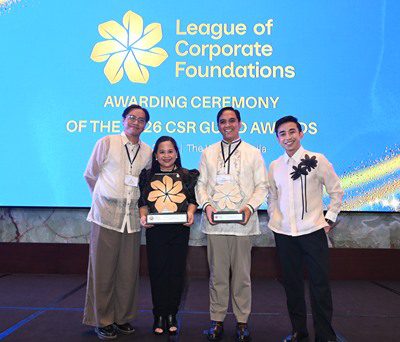
Angeles, Executive Director, Christian Tandoy, Assistant Manager of
RMHC Philippines, and Lei Ramos (Principal & CMO, AHA! Behavioral Design)
BACK-to-BAKuna was designed around that idea. Rather than simply encouraging families to get vaccinated, the program focuses on the behaviors and circumstances that can make it difficult for caregivers to follow through.
The initiative was piloted in Iloilo City and the Municipality of Janiuay in August 2025, bringing together behavioral research, local community partnerships and simple tools intended to make vaccination journeys easier to manage.
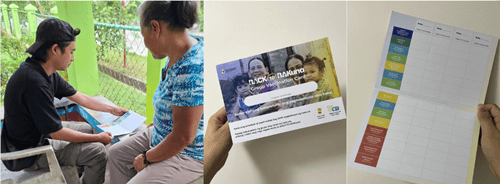
These included group vaccine cards, milestone calendars and digital reminders to help caregivers keep track of schedules. The program also provided transport support and health promotion activities to address some of the practical barriers that can stand between a family and a vaccination appointment.
The approach recognizes that a caregiver may already understand the importance of vaccines but still encounter obstacles along the way. A busy schedule, difficulty getting to a health facility, concerns about vaccination or simply forgetting the next appointment can all affect whether a child completes the recommended doses.
Early findings from the program point to the value of addressing those barriers. Using a quasi-experimental approach, BACK-to-BAKuna recorded greater improvements in vaccination completion among intervention groups compared with control groups.
The program also found a social dimension to completing vaccination schedules. Caregivers who engaged with their peers, encouraged others to participate and attended vaccination activities together were more likely to complete their children’s vaccination schedules.
That finding underscores how community support can complement the work already being done by local health workers. For some families, having another parent or caregiver to remind, accompany or encourage them can make returning to the health center a little easier.
“The recognition of BACK-to-BAKuna reflects our commitment to creating meaningful and sustainable solutions that respond to the real needs of Filipino families,” Marie Angeles, executive director of RMHC Philippines, tells FrontpagePH.com. She added that supporting caregivers throughout the vaccination journey can help strengthen community health outcomes and ensure more children receive the protection they need.
The program’s longer-term value also lies in its effort to work with, rather than operate separately from, existing public health services.
RMHC Philippines partnered with local government units to incorporate the tested tools and approaches into routine immunization workflows. Through capacity-building support and an Adaptation Playbook, local health teams can continue applying the program’s strategies in their regular health promotion activities.
That focus on sustainability is particularly relevant for childhood immunization, where lasting improvements depend on consistent engagement between families, health workers and communities.
For parents, the practical benefit is straightforward: anything that makes vaccination schedules easier to remember, appointments easier to reach and the process less overwhelming can help children stay protected.
For communities, completing more vaccination schedules can contribute to stronger routine immunization efforts and help local health teams reach families who might otherwise fall behind.
The LCF CSR Guild Award puts a spotlight on BACK-to-BAKuna’s innovation, but its most meaningful measure may ultimately be found in the everyday experiences behind the numbers—caregivers who make it to the next appointment, health workers who have better tools to support families, and children who receive the vaccines they need on time.
In that sense, the program’s story goes beyond an award. It is about making childhood immunization a little easier for Filipino families to complete, one reminder, one visit and one community connection at a time.