
The Department of Environment and Natural Resources (DENR) is intensifying the restoration of wetlands, rivers, and coastal ecosystems nationwide to help communities cope with extreme heat, water shortages, and environmental damage associated with the Super El Niño.
Environment Secretary Juan Miguel “Mitch” Cuna said restoring these natural ecosystems is crucial to protecting water resources, sustaining livelihoods, and strengthening communities against prolonged dry conditions.
Wetlands and rivers serve as natural defenses against drought by storing and regulating water, supporting groundwater recharge, and maintaining habitats essential to agriculture and fisheries. Healthy ecosystems also help moderate local temperatures, making their protection increasingly important during periods of extreme heat.
“We are ensuring that our ecosystems remain functional buffers against extreme heat. Protecting our wetlands, rivers, and reefs nationwide is one way of protecting the communities and ensuring environmental survival,” Cuna said.
In the Caraga Region, the DENR has stepped up conservation efforts at the Agusan Marsh Wildlife Sanctuary, where peatlands and freshwater wetlands act as natural sponges that absorb and retain water, regulate its movement, and help prevent surrounding areas from drying out rapidly.
The agency is reforesting riverbank buffer zones with wetland-adapted tree species and monitoring drainage canals to prevent excessive water loss. These measures aim to preserve moisture in the marsh, protect biodiversity, and maintain ecological functions that support nearby communities.
Restoring wetlands also helps protect valuable carbon reserves stored in peatlands. When these areas dry out, they become more vulnerable to degradation and fires, potentially releasing stored carbon into the atmosphere.
Meanwhile, in Metro Manila and Central Luzon, the DENR has intensified river cleanup operations to restore water flow and prevent accumulated waste from obstructing waterways during dry conditions.
Through the Manila Bay Rehabilitation Initiative, the agency’s Manila Bay Site Coordinating and Management Office (MBSCMO) partnered with the Department of Labor and Employment’s TUPAD program to deploy River Rangers for a 10-day cleanup operation along rivers, creeks, and estuaries in Pampanga.
The operation removed 98,618.93 kilograms of solid waste, equivalent to 15,267 sacks, from riverbanks and trash traps.
Clearing waterways helps maintain water circulation, limits pollution buildup, and improves conditions for aquatic life. It also reduces blockages that could worsen flooding when heavy rains return after prolonged dry spells.
The DENR continues to monitor water sources and tributaries in Bulacan, Pampanga, Nueva Ecija, Bataan, and Tarlac, coordinating with local governments and other agencies to address emerging environmental concerns.
Beyond inland waterways, the government is also strengthening protection of marine ecosystems threatened by rising sea temperatures.
In Central Luzon, DENR Region 3 is monitoring marine heat stress in the coastal waters of Aurora, Bataan, and Zambales to assess potential impacts on coral reefs and fisheries.
Similar measures are underway in Masbate, where environmental authorities have identified shallow coral reefs and seagrass beds in Mobo and San Jacinto as particularly vulnerable to extreme heat.
The DENR is conducting monitoring every two weeks for coral bleaching and fish kills, with findings reported to the Bureau of Fisheries and Aquatic Resources, municipal agriculture offices, and disaster risk reduction authorities.
Field personnel have also cleared blocked waterways to maintain seawater circulation through mangrove forests. Restrictions on boat anchoring and resource extraction in heat-affected coral reef areas are being enforced to minimize further damage and support ecosystem recovery.
Fisherfolk and coastal communities are likewise being informed about the effects of rising temperatures on marine life and the importance of protecting vulnerable habitats.
These measures are particularly important for coastal communities dependent on healthy reefs, mangroves, and seagrass beds for fishing, food security, and income.
For the DENR, restoring wetlands and rivers is not simply an environmental undertaking but a practical investment in water security, climate resilience, and community protection.
As extreme dry conditions put increasing pressure on the country’s natural resources, maintaining healthy waterways and ecosystems can help reduce water stress, protect biodiversity, and sustain livelihoods.
The agency’s nationwide restoration efforts underscore the role of nature-based solutions in helping communities withstand climate extremes while preserving the natural resources on which they depend.
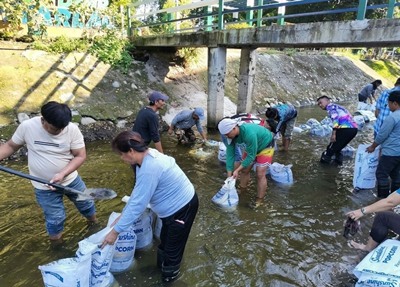
(MAIN PHOTO:: DENR personnel and community volunteers install sandbags along Ungot Creek in Paraiso, Tarlac to create a small water reservoir that helps regulate water flow, mitigate flood risks, and retain water for nearby vegetation.