
The Department of Agriculture (DA) is stepping up efforts to boost Philippine agricultural exports while tightening oversight of farm infrastructure projects, as the government seeks to improve farmers’ incomes, expand market access, and strengthen the country’s food supply.
The Philippines generated US$17.5 million in export sales and sales projections at Asia Fruit Logistica (AFL) 2026 in Hong Kong, marking a strong return to one of Asia’s leading fresh produce trade shows after nearly a decade.
The DA said the results, recorded as of September 15, reflected growing international demand for Philippine agricultural products and opened opportunities for local exporters to establish long-term partnerships with overseas buyers.
Held from September 2 to 4 at AsiaWorld-Expo, the trade event brought together international buyers, distributors, and producers, providing Filipino exporters a platform to showcase high-value agricultural commodities and explore new markets.
Agriculture Secretary Francisco Tiu Laurel Jr., who led the Philippine delegation alongside Undersecretary Philip Young, said the government intends to translate the commercial gains into sustainable opportunities for farmers and agribusinesses.
“Every new export market we open is another opportunity for Filipino farmers and agribusinesses to compete on the world stage,” Tiu Laurel said.
He emphasized that increasing exports must go hand in hand with improving product quality, meeting international standards, and ensuring that farmers benefit from expanding trade opportunities.
The strong showing comes as the Philippines continues to face an agricultural trade imbalance, with farm imports exceeding exports by around US$11 billion in recent years.
Young said the results demonstrated the competitiveness of Philippine high-value crops and the importance of stronger cooperation between government agencies, exporters, and industry associations.
To sustain the momentum, the DA plans to intensify business matching, gather market intelligence, and help exporters comply with international quality requirements.
But expanding access to overseas markets is only part of the challenge. The government must also ensure that agricultural products can move efficiently from farms to trading centers and ports, making reliable infrastructure equally critical to the country’s export ambitions.
This concern has placed farm-to-market road projects under renewed scrutiny following allegations of irregularities involving more than P94 million in public funds.
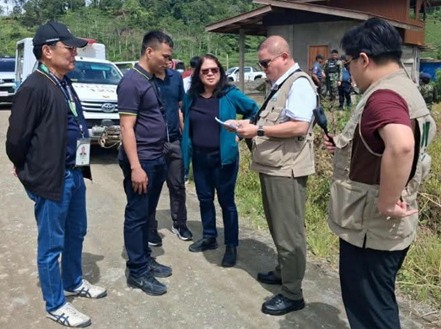
The DA welcomed the Office of the Ombudsman’s preventive suspension of three Department of Public Works and Highways (DPWH) officials linked to eight allegedly unfinished or nonexistent farm-to-market road projects in Davao Occidental.
In orders dated September 21, the Ombudsman placed DPWH officials James Ryan Jabonero, Jonathan Relacion, and Zesrel Cuga under preventive suspension for up to six months, pending the conclusion of proceedings.
The suspension orders followed complaints filed on May 21 by Tiu Laurel and the DA against several DPWH personnel and private contractors for alleged graft, malversation, and falsification of public documents.
According to the complaints, several road projects had been declared completed and fully paid despite remaining unfinished or lacking evidence of the reported construction work.
In one instance, a project certified as 100 percent complete was reportedly still under construction despite full payment in 2023. Another project inspected by the DA’s Internal Audit Service allegedly had no graveled pathways.
The complaints also named other former DPWH officials and private contractors allegedly involved in the projects.
Tiu Laurel said the government must ensure that public infrastructure investments produce actual benefits for farmers and fisherfolk, rather than exist merely as completed projects on paper.
“For farm-to-market roads, these are our farmers and fisherfolk, whose faster access to markets means higher incomes, lower production costs, and stronger rural development,” he said.
Farm-to-market roads play a crucial role in agricultural competitiveness by reducing transportation expenses, minimizing post-harvest losses, and allowing producers to bring their goods to market more quickly.
These improvements are particularly important as the country seeks to expand agricultural exports, where timely deliveries, consistent supply, and competitive pricing are essential to securing international buyers.
The DA stressed that the allegations against the officials and contractors remain subject to investigation and adjudication.
While the US$17.5-million trade showing reflects the potential of Philippine agricultural products in international markets, the controversy surrounding farm-to-market roads highlights the importance of accountable infrastructure spending.
Together, the developments underscore a broader challenge for Philippine agriculture: opening more markets abroad while ensuring that farmers have the infrastructure, institutional support, and opportunities needed to benefit from increased demand.
For the DA, sustaining agricultural growth will require not only stronger export promotion but also effective public investments that connect Filipino producers to markets at home and overseas.
(PHOTO CREDIT: Department of Agriculture)