
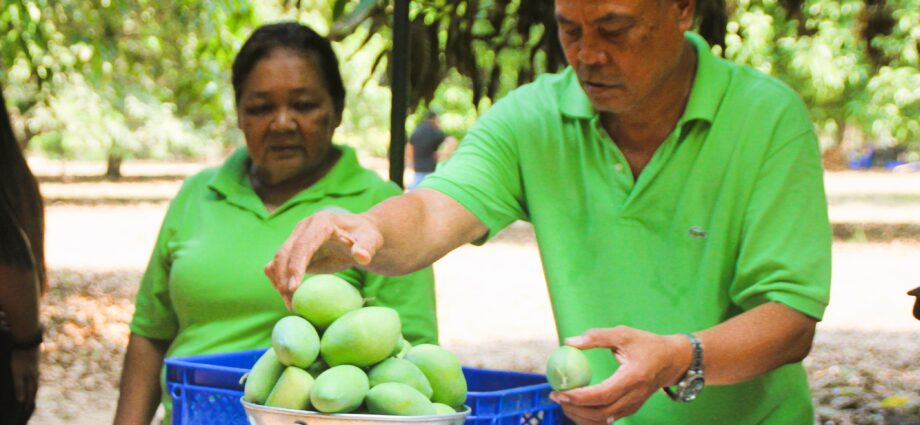
IBA, Zambales — The provincial government of Zambales has initiated an ambitious four-year program to elevate the production and global competitiveness of its most iconic product, the Dinamulag mango, widely acclaimed as the sweetest mango variety in the world.
Governor Hermogenes Ebdane Jr. announced that nearly P50 million has been allocated for the Zambales Mango Green Valley Project, aimed at expanding mango production areas, boosting yield per hectare, and strengthening the province’s mango value chain.
“This is the first comprehensive effort to modernize and revitalize Zambales’s pride, the Dinamulag mango,” Ebdane said. “The project integrates crop management, technological innovations, environmental sustainability, and marketing support to empower local mango growers and traders.”
Pilot Farms to Showcase Modern Techniques
An initial P6.46 million has been granted to the Samahang Magmamangga ng Zambales (SMZ) to establish pilot modern mango farms. These include the 31.6-hectare Batungbacal Farm in Palauig and the government-owned Sitio Buen Farm in Botolan. Another site, the privately funded 24-hectare Alma’s Farm in Iba, will also participate in the initiative.
“These pilot farms will demonstrate advanced mango production techniques to encourage broader adoption by local growers,” Ebdane explained.
Phased Implementation Plan
The project comprises three key phases:
- Phase 1 (2024): Establishment of modern mango production areas, utilizing advanced methods like flower induction, fruit bagging, and efficient irrigation.
- Phase 2 (2025-2028): Rehabilitation and rejuvenation of 20,800 existing mango trees through strategic pruning, projected to increase yield by 50-60%.
- Phase 3: Establishment of mango nurseries to ensure a consistent supply of high-quality seedlings and support farm expansion efforts.
Focus on Sweet Elena Strain
The initiative will promote the “Sweet Elena” strain of the Zambales carabao mango, originating from Santa Cruz. Known for its exceptional sweetness and superior qualities, the Sweet Elena strain holds a Guinness World Record as the sweetest mango (1995).
Arnel Abayan, supervising agriculturist at the Provincial Agriculture Office, noted that Zambales mango production currently averages only 2.378 tons per hectare—far below the national average of 12 tons. The program aims to surpass this benchmark, revitalizing an industry that has suffered due to pests, poor weather, and outdated practices.
Reviving an Industry in Decline
The P40 million allocated for Phase 2 includes efforts to address the challenges of declining production by introducing modern techniques and better management. Meanwhile, Phase 3 will ensure a stable supply of seedlings to sustain future growth.
Gov. Ebdane expressed optimism about reversing the decline of the local mango industry. “We are committed to turning things around for the Dinamulag mango and for our farmers and traders,” he said.
This comprehensive program seeks not only to restore the glory of the Zambales mango but also to secure its place as a global standard of excellence in mango production.