
MANILA — After more than a decade of working with farming communities across the Philippines, Global Seed Savers is shifting to fully local operations, marking a transition to Filipino leadership in a move seen to strengthen grassroots efforts in preserving agricultural biodiversity and food security.
The nonprofit organization announced it will transfer all operations to the Philippines, positioning itself as a fully Filipino-led and based institution after 16 years of partnership with local farmers. The transition underscores what the group describes as the “readiness and maturity” of its Philippine team and networks.
Executive Director Hal Atienza said the shift reflects the central role Filipino farmers have long played in the organization’s work.
“For more than 16 years, Filipino farmers have been at the heart of everything Global Seed Savers does,” Atienza pointed out. “Now, the leadership of this organization fully reflects that reality. We will continue to train farmers, protect heirloom seeds, and strengthen the communities that sustain us — and we will do it from right here, alongside the people we serve.”
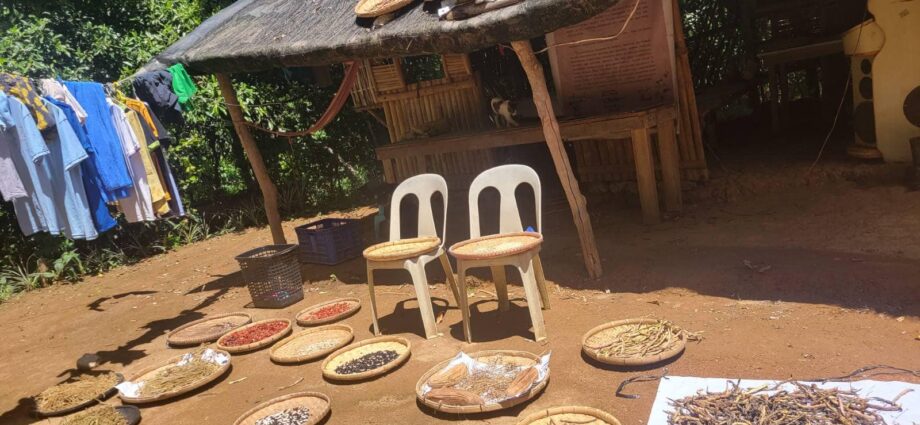
Founded in 2010, Global Seed Savers has focused on preserving heirloom seeds and promoting seed sovereignty, an approach that allows farmers to save, exchange, and cultivate their own seeds independent of commercial supply chains. Over the years, the group has built partnerships with smallholder farmers, indigenous communities, and local governments.
Among its key initiatives is the Seed School program, which has trained more than 5,000 farmers in seed-saving techniques. The organization has also established six community seed libraries across the country, enabling local communities to store, share, and manage their own seed supply.
These efforts form part of a broader push to protect traditional farming practices while improving resilience in local food systems, particularly as climate risks and supply disruptions continue to affect agriculture.
The transition will also see founder and CEO Sherry Manning step down after building the organization over the past 16 years. Manning, who helped grow Global Seed Savers from a small initiative into a national network, will remain involved as an advisor and financial donor.
“Building Global Seed Savers has been the privilege of my lifetime,” Manning proudly declared. “What started as a small initiative in 2010 has grown into something far bigger than any one person. It belongs to the farmers, the communities, and the team in the Philippines who have made this work possible.”
She added that she is confident the organization’s Philippine leadership will continue to expand its impact.
Atienza, who assumed the role of executive director in 2023, brings more than three decades of experience in social development and nonprofit leadership. Under his direction, the organization is expected to deepen engagement with small and family-owned farms while expanding community-based programs.
Despite the operational shift, Global Seed Savers said its existing partnerships and programs will continue without disruption. Support from US-based donors and foundations will remain in place, while the group works to strengthen its local funding base. The organization’s US office is set to close by July 31, 2026, with a small group retained for governance oversight.
The move comes at a time when food security and sustainable agriculture are gaining renewed attention, with advocates emphasizing the importance of local knowledge and farmer-led systems in ensuring long-term resilience.
By transitioning to full Philippine operations, Global Seed Savers signals a shift toward more localized leadership in development work—placing decision-making closer to the communities it aims to serve, and reinforcing the role of Filipino farmers not just as beneficiaries, but as stewards of the country’s agricultural future.