

IT’S a brand-new year and for many, it’s still a learning process getting used to doing everything at home, either for working or learning in a so-called “new normal.” As restrictions in mobility are again in play due to the new Omicron variant of COVID-19, everyone is forced to stay at home. It also changed the way we communicate, exercise, work, and eat.
All of these sudden changes and the necessity to adapt quickly may also result in feeling anxious and worse, stressed.
To many, too much stress, which is more mental/psychological than physical, if not managed right, can be detrimental to one’s health. According to Susan Bowerman, Senior Director, Worldwide Nutrition Education and Training, Herbalife Nutrition, it is a surprise to learn that anxiety and stress can manifest in one’s eating patterns, leading to what is commonly known as emotional eating or “stress eating.”
So what is “stress eating” or emotional eating? It is pretty much what it sounds like, where someone eats in order to escape whatever bad feelings are being experienced, hoping that food will make one feel better.
Sometimes it’s a conscious decision, but more often it’s just a mindless response to a vague, negative emotion that people can’t quite put their finger on. Stress and boredom can trigger emotional eating, particularly when stuck at home, sometimes alone, and surrounded by food all day long. Whether ordering comfort food that are higher in calories than the usual meals or cooking at home with limited ingredients on-hand, eating may become different than the usual.
Stress, says Bowerman, can also bring on fatigue or depression, so healthy eating might take a back seat to food that bring more comfort. High-calorie comfort food can stimulate the release of certain chemicals in the brain that make one feel good, but also trigger the want to keep eating. In a vicious cycle, overeating can lead to weight gain — increasing stress and which, in turn, can lead to more overeating.
When thinking of the best way to prevent stress eating, the most important thing everyone should be doing right now is taking the best possible care of themselves, and that involves practicing good eating habits to keep healthy.
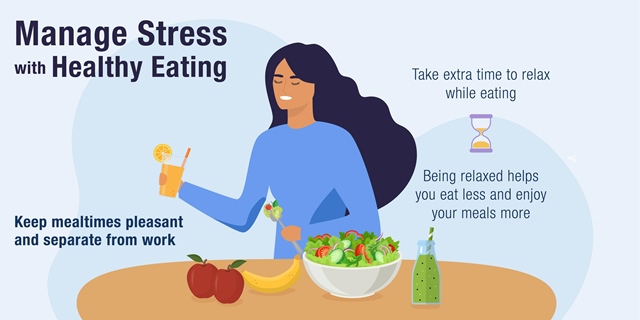
Below are some of Bowerman’s advice on how to stop emotional eating.
- Own up to your feelings.
People know that emotions are the trigger for stress eating, so why not acknowledge them? “It’s OK to feel mad, lonely or bored sometimes. The feelings may be unpleasant, but they’re not dangerous, and you don’t always need to ‘fix’ them. Let your emotions come and go without judging them.”
2. Find alternatives to eating.
A brisk walk or a cup of herbal tea, says Bowerman, might work instead. If you feel the need to eat, she said, try hard, crunchy food; they help relieve stress by putting tight jaw muscles to work. Try snacking on a handful of almonds, soy nuts or baby carrots, Bowerman pointed out.
3. Eat regularly and don’t skip meals.
“Give yourself permission to eat,” Bowerman advised. When feeling stressed, it’s easy to put meals off or even skip them altogether, however, energy levels will suffer as a result, and it might even end up to overeating when finally the urge to eat is there. If stress is an appetite-killer, Bowerman said to try eating smaller amounts of food more often during the day.
4. Cut back on caffeine.
People often feel a lack of energy when they’re stressed and turn to caffeine as a pick-me-up, but it can disrupt sleep at night, warns Bowerman. “If caffeine keeps you awake at night, drink decaffeinated coffees and teas.”
5. Practice mindful eating.
When eating mindfully, try to become more aware of internal signals of hunger and fullness, Bowerman emphasized. “You also become more in tune with what triggers you to eat in the first place. Mindful eating can help you avoid overeating and allow you to enjoy your food more—even when you eat less. You can also learn to pay more attention to what you’re choosing to put into your body,” she said.
Remember, this is not the time to be restricting food intake, but a time to focus on eating the most nutrient-dense food one can in order to optimize nutrition to support a healthy immune system, according to Bowerman. This pandemic, she added, has undoubtedly added stress to all people’s lives but learning how to cope with it can make anyone, the people they care about, and the community stronger.