
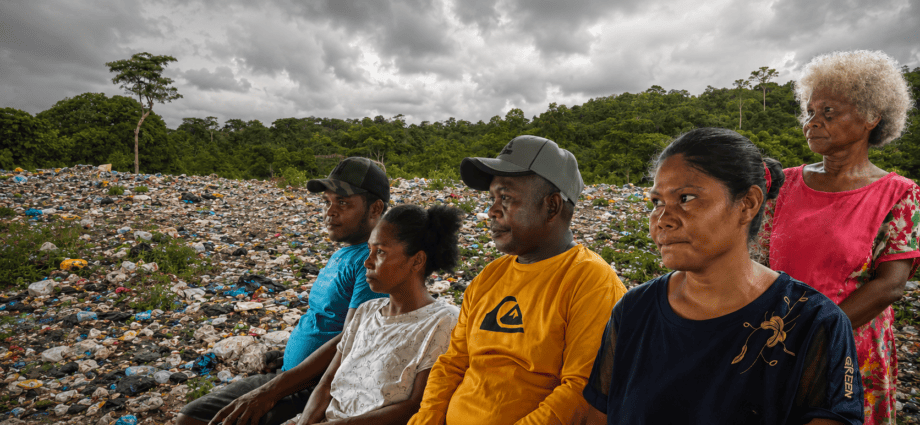
The National Institute for Transparency and Accountability (NITA) has stated that the local government of Subic, a private landowner, and the Ayta Ambala Council should not be blamed for the controversy surrounding a former temporary waste disposal site in Sitio Tibag, Barangay Naugsol.
According to NITA’s formal investigation and assessment report, the location was utilized strictly as a temporary dumpsite during the peak of the COVID-19 pandemic when movement and operations were severely restricted.
NITA Executive Director and Spokesperson Carlos Ayala explained that the local government faced critical challenges in continuously collecting waste and securing facilities capable of handling solid waste from residential and commercial establishments in Subic. The temporary measure was implemented to prevent garbage from accumulating in residential and commercial sectors, which could have triggered severe sanitation and public health crises. Ayala noted that the Subic local government was forced to act because it had an obligation to address an urgent public service problem in the middle of a pandemic.
Investigations revealed that the municipal government did not forcefully seize or claim the land. Instead, formal permission was sought from individuals and groups linked to the property. Private landowner Jose Tenoria permitted a portion of his land to be used temporarily, while Tribal Chieftain Francis Santos confirmed that the Ayta Ambala Council agreed to support the local government as a gesture of reciprocity for the regular assistance and services extended to their community. However, NITA emphasized that any decisions regarding ancestral domains and compliance with laws concerning indigenous peoples must ultimately come from mandated government agencies.
The Subic LGU officially stopped dumping waste at Sitio Tibag in 2022 after securing access to an alternative waste disposal facility in Pampanga. NITA stated that this transition proves the site was merely a temporary emergency dumpsite rather than a permanent municipal facility. During an inspection, the NITA team observed no strong foul odors typically associated with active, open dumpsites. They also noted scattered solid waste rather than massive piles of newly discarded garbage, which may have been dispersed across a wider area by recent typhoons and heavy rains. Furthermore, no reports were filed by residents living approximately three kilometers away regarding widespread health issues directly linked to the former site.
NITA has outlined several corrective recommendations to address environmental and safety concerns, including conducting a comprehensive inventory and classification of remaining waste, performing soil and water quality assessments, drafting a formal closure and rehabilitation plan, implementing measures to prevent waste dispersal during storms, and restoring vegetation with regular monitoring reports until rehabilitation is complete. The institute stressed that covering the former dumpsite with soil should only be executed as part of a technically approved plan and after authorities evaluate the environmental impact.
Furthermore, NITA clarified that its findings are based on visual inspections, interviews, and consultations, and do not substitute for formal scientific testing of soil, groundwater, surface water, and air quality, nor do they replace regulatory proceedings or official court rulings.