THE latest Social Weather Stations (SWS) survey, revealing that 41 percent of Filipinos support the impeachment of Vice President Sara Duterte, comes as no surprise given the mounting evidence of alleged fund misuse and betrayal of public trust.
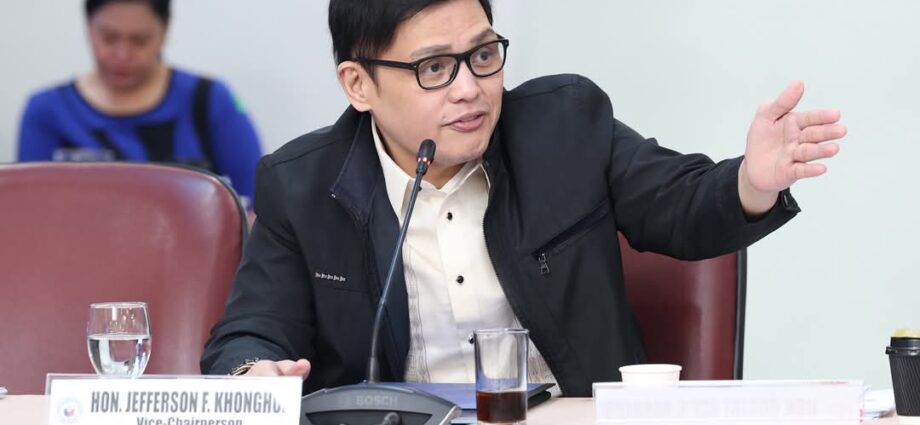
This was the assessment of House Assistant Majority Leader and Zambales 1st District Rep. Jay Khonghun and Deputy Majority Leader and La Union 1st District Rep. Paolo Ortega V. The two lawmakers emphasized that the survey reflects widespread public frustration over Duterte’s alleged mismanagement of P612.5 million in confidential funds allocated to the Office of the Vice President (OVP) and the Department of Education (DepEd) during her tenure as Secretary.
“The numbers don’t lie. The public is demanding accountability, and this survey reflects their growing outrage over the glaring irregularities surrounding the Vice President’s actions,” Khonghun said.
Congressional hearings have reportedly unearthed troubling evidence, including fabricated recipients such as “Mary Grace Piattos” and thousands of questionable transactions tied to confidential funds under Duterte’s control.
The survey, conducted from December 12 to 18, 2024, found that 41 percent of respondents support Duterte’s impeachment, 35 percent oppose it, and 19 percent remain undecided.
Duterte currently faces three impeachment complaints in the House of Representatives, accusing her of gross incompetence, betrayal of public trust, and deliberate misuse of public funds. Ortega underscored that the complaints are based on solid evidence rather than political motivations.
“This is about accountability. The evidence against the Vice President is glaring, from the misuse of confidential funds to a pattern of governance riddled with questions. The Filipino people deserve answers, and their support for impeachment shows they are demanding transparency and justice,” Ortega said.
Evidence of Fund Misuse
A months-long investigation by the House Blue Ribbon Committee revealed irregularities in Duterte’s handling of public funds. Confidential funds intended for official purposes were allegedly distributed to unauthorized individuals, including security officers instead of designated special disbursing officers, acting under Duterte’s explicit instructions.
The investigation also uncovered falsified acknowledgment receipts signed by fictitious individuals like “Mary Grace Piattos” and “Kokoy Villamin,” listed as recipients of confidential funds. The Philippine Statistics Authority (PSA) confirmed that no records of these names exist, raising further suspicions.
Among the questionable expenditures was P16 million for the rental of 34 safe houses over 11 days in late 2022, with one safe house reportedly costing nearly P91,000 per day. Additionally, the OVP claimed to have allocated P15 million for youth leadership summits allegedly conducted with the Philippine Army. However, military officials denied receiving the funds, stating the events were supported by the military and local governments, not the OVP.
Congressional Responsibility
Khonghun said the survey results highlight Congress’s duty to uphold the integrity of the impeachment process.
“The public expects us to ensure that no one is above the law, no matter how powerful they may be,” he said.
Ortega added that the Blue Ribbon Committee’s findings show a clear pattern of deception and abuse.
“Filipinos are watching. They are sending a clear message that leadership should be built on trust, not entitlement. It is now up to Congress to respond to their call for accountability,” he said.
Growing Public Demand for Justice
As the impeachment complaints progress through the House of Representatives, Duterte faces mounting public and political pressure.
“The survey is just the beginning. The evidence is overwhelming, and the Filipino people deserve justice,” Khonghun said. “No one is above the law—not even the Vice President.”
The impeachment deliberations are expected to become a critical test of both Duterte’s leadership and the nation’s commitment to accountability and transparency in governance.