
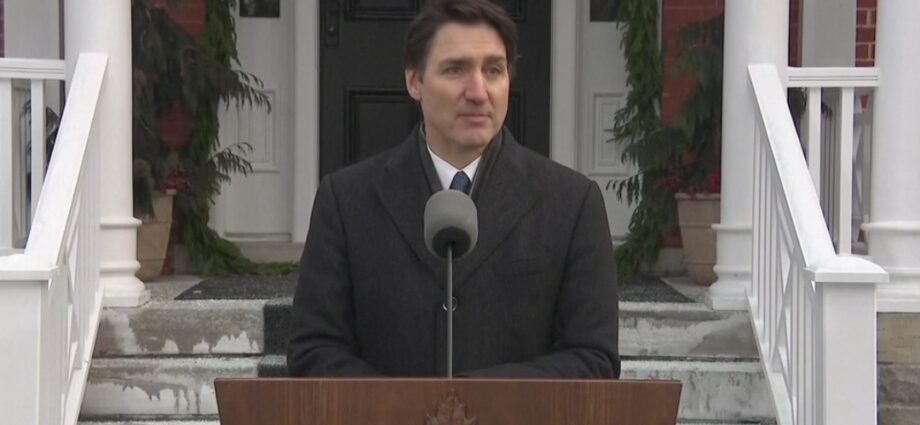
CANADIAN Prime Minister Justin Trudeau has announced his decision to step down after nine years in office, following mounting pressure from within his Liberal Party. Trudeau will remain in office until a new leader is chosen, with the process expected to culminate in March.
“This country deserves a real choice in the next election, and it has become clear to me that if I’m having to fight internal battles, I cannot be the best option,” Trudeau said at a press conference in Ottawa.
Trudeau’s personal unpopularity has increasingly hindered his party’s prospects ahead of federal elections slated for later this year. His decision follows Deputy Prime Minister Chrystia Freeland’s abrupt resignation in December, which signaled deeper fractures within the party. Freeland had criticized Trudeau’s response to U.S. President-elect Donald Trump’s proposed tariffs on Canadian goods, a move that experts warned could severely impact Canada’s economy.
Liberal Leadership Contest and Political Fallout
Liberal Party President Sachit Mehra confirmed that the party’s board of directors will begin the process of selecting a new leader this week. Trudeau emphasized that the process would be “robust and nationwide.”
Despite Trudeau’s announcement, Conservative leader Pierre Poilievre dismissed the development as superficial. “Every Liberal MP and leadership contender supported everything Trudeau did for nine years. Now they want to trick voters by swapping in another face,” Poilievre wrote on X (formerly Twitter).
Since 2019, the Liberals have governed as a minority, propped up by alliances with the New Democrats and Bloc Québécois. However, recent political shifts have left Trudeau without critical support. Polls indicate the Conservatives maintain a significant lead, suggesting a challenging path ahead for the Liberals.
End of the Trudeau Era
Trudeau’s resignation marks the end of an era in Canadian politics. As the son of former Prime Minister Pierre Trudeau, he rose to power in 2015, promising progressive reform and “Sunny Ways.” His government implemented key policies, including a national carbon tax, the Canada Child Benefit, and the legalization of recreational cannabis.
Despite these achievements, Trudeau’s tenure was marred by scandals, including the SNC-Lavalin affair, controversial brownface photos, and backlash over pandemic-era vaccine mandates, which culminated in the Freedom Convoy protests. Economic challenges, such as rising housing and food costs, further eroded public support.
Mixed Reactions to Resignation
Responses to Trudeau’s resignation have been divided. Assembly of First Nations National Chief Cindy Woodhouse Nepinak praised his efforts toward reconciliation with Indigenous peoples, noting “meaningful steps” had been taken. However, others celebrated his departure. In Ottawa, a small group of protesters danced outside Parliament Hill, while others expressed a sense of closure.
“It feels like the end of an era,” said Marise Cassivi, a Canadian citizen. Asked if she felt sadness, she replied, “No. It’s the right thing.”
The Liberal Party now faces the challenge of finding a new leader capable of restoring public trust and steering the party toward success in the upcoming election.