
A QUIET revolution is reshaping Philippine agriculture: instead of working alone and selling at low prices, smallholder farmers are banding together and learn to lead, plan, and negotiate like businesses to secure better markets and build more resilient livelihoods.
Across the country, farmer groups are adopting the Agro-Enterprise Clustering Approach (AECA), a structured method that helps communities organize, share resources, and collectively supply institutional buyers with consistent volume and quality. The approach sits at the heart of the Agro-Enterprise for Inclusive Value Chains (AEIVC) Training Program developed by the Jollibee Group Foundation (JGF) and Xavier University–Ateneo de Cagayan.
By training agri-extension workers and field partners to guide farmers through the AECA process—from organization and market study to production planning and enterprise improvement—more farmers are increasingly able to treat their farms as viable businesses rather than just sources of harvest.
Since its launch in 2021, the program has already trained more than 339 practitioners nationwide, many of whom now mentor farmer groups on the ground. Organizations like KAISAHAN, which supports smallholder farmers in asserting land rights, have seen firsthand the value of the approach. The training, they said, gave them practical tools to help farmers organize, market collectively, and build stronger enterprises.
“AECA is more than clustering farmers,” said Jec Magbato, KAISAHAN’s AECA Officer in Negros Occidental. “The training equipped us to help farmers strengthen their management and business skills so they can participate confidently in the agriculture value chain.”
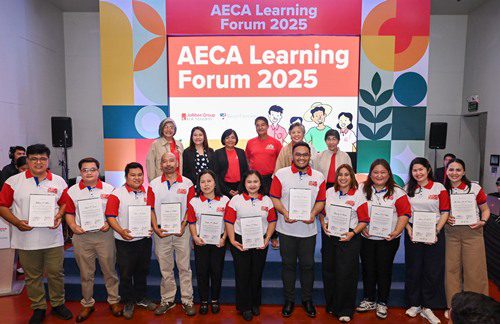
To keep momentum, JGF and Xavier University host the AECA Learning Forum, a platform where trained facilitators share field insights, exchange solutions, and refine their support systems for farmer groups.
Through AECA, farmers learn to negotiate prices, meet delivery requirements, and reinvest in their enterprises—turning farming into a sustainable, market-driven livelihood. This collective approach reflects JGF’s broader mission of advancing food security, strengthening rural communities, and contributing to national progress toward zero hunger.