
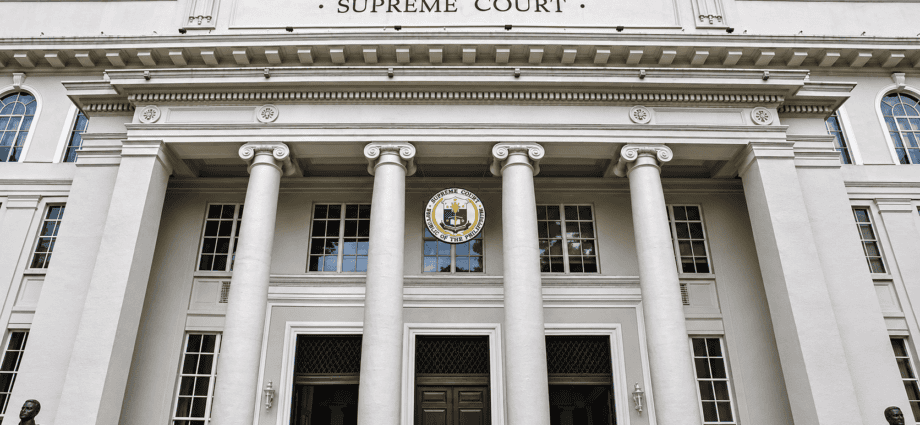
The Supreme Court has acquitted a woman convicted of cyber libel over Facebook posts criticizing a former mayor, ruling that prosecutors failed to establish that she knowingly published false statements or acted with reckless disregard for their truth.
In a decision made public by the Supreme Court on November 27, the Second Division emphasized that proving actual malice is necessary to secure a cyber libel conviction involving statements against public officials.
The ruling, penned by Associate Justice Jhosep Y. Lopez, cleared Jade Karla Tan of charges under Republic Act No. 10175, or the Cybercrime Prevention Act of 2012.
The case stemmed from Facebook posts in which Tan criticized then-Catanauan, Quezon Mayor Ramon Orfanel, accusing him of corruption and suggesting that permits for a proposed business development were being withheld in exchange for money.
Tan published the posts after plans to establish a fast-food branch in the municipality failed to materialize. Her family had previously approached the local government regarding the proposed business.
The Regional Trial Court convicted Tan of cyber libel, a decision the Court of Appeals later upheld.
The appellate court found that Tan had acted with actual malice, citing her apparent resentment toward Orfanel, the language used in her posts, and the circumstances surrounding their publication.
However, the Supreme Court overturned the conviction, finding insufficient evidence that Tan knew her allegations were false or seriously doubted their accuracy when she published them.
The high court explained that actual malice requires proof that a person deliberately made a false statement or proceeded with publication despite serious doubts about its truthfulness.
It stressed that offensive language, personal resentment, or failure to verify information does not automatically establish actual malice.
The Court also clarified that inaccurate statements made in good faith do not necessarily satisfy the standard required for criminal liability.
The ruling underscored the importance of protecting freedom of expression, particularly when public criticism involves government officials and the performance of their duties.
In a separate concurring opinion, Senior Associate Justice Marvic M.V.F. Leonen supported the acquittal, warning that criminal prosecution over criticism of public officials could discourage citizens from speaking out against perceived government wrongdoing.
Leonen emphasized that public accountability requires broader protection for expressions concerning government conduct, even when certain allegations are subsequently found to be inaccurate.
The Supreme Court also reiterated that Congress decides whether to retain, amend, or repeal criminal libel laws, while the judiciary remains responsible for ensuring that the legal requirements for conviction are properly established.
The ruling was issued on January 13, 2026, in Jade Karla Tan y Cabangon v. People of the Philippines, G.R. No. 265929.