
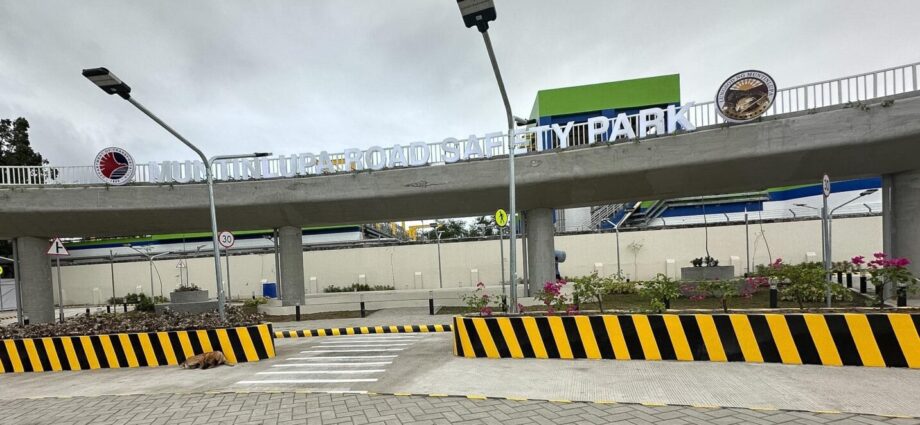
MUNTINLUPA CITY — In a bid to move the country away from decades of “car-centric” urban planning, the Department of Transportation (DOTr) and the Muntinlupa City government officially inaugurated the Philippines’ first Road Safety Park at the Tunasan Baywalk.
The 3,140-square-meter facility serves as a miniature “model city” designed to educate the next generation of road users through hands-on experience before they ever hit the actual pavement.
The park is equipped with simulated road networks, various cycle lane classifications, and a dedicated public transport stop. It also features a comprehensive road signage park, a stage area for lectures, and a viewing deck for instructors to monitor simulations.
Transportation chief Giovanni Lopez emphasized that the facility is a direct response to President Ferdinand Marcos Jr.’s mandate to prioritize inclusive and “people-centered” infrastructure. “The President’s constant instruction is to ensure our roads are safe—not just for motorists or pedestrians, but for everyone on the street,” Lopez stated during the launch.
This initiative arrives as Metropolitan Manila Development Authority (MMDA) data continues to identify human error as the leading cause of road crashes nationwide. By integrating road safety into early childhood experiences, officials hope to correct bad habits before they form. Lopez admitted that road safety has not historically been a strong part of Filipino culture, echoing Mayor Rozzano Rufino Biazon’s call to integrate traffic education directly into the school curriculum.
Mayor Biazon hailed the project as a necessary evolution of the city’s transport philosophy, noting that the days of being purely car-centric are over. He argued that the direction of modern urban planning must lean toward active mobility, such as walking, cycling, and public transport.
Advocacy groups present at the launch, including AltMobility PH and the Barangay Organization of Persons with Disabilities, underscored the importance of recognizing the rights of “vulnerable road users.” Commuters 4 Change convenor Toix Cerna added that as children learn road safety ethics, they must also be taught their rights as pedestrians and bike users to ensure the streets have space for everyone.
Beyond the miniature intersections and signage galleries, the park features inclusive designs accessible to persons with disabilities (PWDs). The DOTr confirmed that this Tunasan facility is part of a larger nationwide rollout that includes the construction of protected bike lanes and dedicated walkways across various regions to ensure a safer, more integrated transport network.