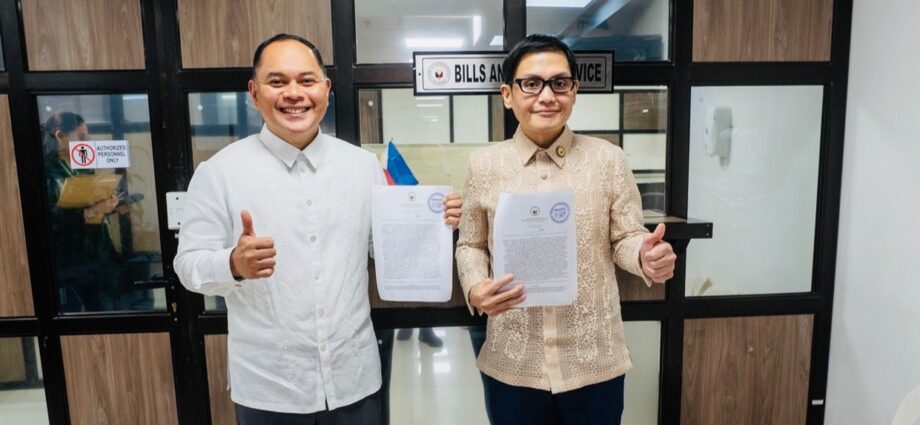
Deputy Speaker David “Jayjay” C. Suarez of the 2nd District of Quezon and Deputy Speaker Jefferson F. “Jay” Khonghun of the 1st District of Zambales have launched the GINHAWA KIT, a landmark legislative package under the priority agenda of Lakas–Christian Muslim Democrats (LAKAS-CMD).
The comprehensive reform initiative directly addresses three of the most pressing daily burdens faced by Filipino families—high electricity costs, unreliable and expensive internet access, and barriers to securing decent employment.
Standing for Ginhawa sa Kuryente, Internet, at Trabaho, the GINHAWA KIT aims to reform essential systems so that ordinary households can move beyond survival toward genuine opportunity, dignity, and progress.
“Through the GINHAWA KIT, we are bringing real and immediate relief where Filipino families feel the heaviest burden—on their electricity bills that keep the lights on, their internet connection that opens doors to learning and opportunity, and their path to a decent and dignified job,” Suarez said.
Khonghun underscored the party’s unified commitment to pro-poor and pro-Filipino reforms that deliver tangible benefits.
“Ang GINHAWA KIT ay patunay na ang LAKAS-CMD ay laging nasa tabi ng bawat pamilyang Pilipino na nahihirapan sa araw-araw na gastusin. Dapat maramdaman nila na may pag-asa at suporta—hindi lang pangako, kundi tunay na aksyon para sa mas magaan na buhay at mas magandang kinabukasan,” he said.
Three Key Measures
The GINHAWA KIT consists of two proposed bills and one House resolution:
House Bill 8191 or the “GINHAWA sa Kuryente Act”
The bill seeks to amend Electric Power Industry Reform Act of 2001 to automatically enroll qualified marginalized households in the lifeline rate program, removing bureaucratic barriers that have prevented many from availing of the benefit.
It also proposes a uniform 50 percent discount on electricity charges for households with at least one minimum wage earner, applicable to their principal residence. Safeguards include a one-account-per-household rule, periodic revalidation, strict data privacy measures, and the creation of an inter-agency oversight committee to prevent misuse.
House Resolution 823 or the “GINHAWA sa Koneksyon ng Internet”
The resolution directs the House Committee on Information and Communications Technology to conduct an inquiry, in aid of legislation, into the reliability, quality, affordability, and consumer protection mechanisms in internet and data services.
The review will build on the implementation of the Konektadong Pinoy Act, examining pricing relative to household income, rural-urban service gaps, enforcement by regulatory agencies, and the impact of connectivity issues on education, remote work, and digital inclusion.
The goal is to strengthen competition, transparency, and universal access.
House Bill 8192 or the “GINHAWA sa Paghahanap ng Trabaho Act”
The proposed measure seeks to amend First Time Jobseekers Assistance Act by standardizing documentary requirements at the job application stage and prohibiting abusive practices, such as requiring original civil registry documents or multiple overlapping clearances.
It also proposes the creation of a secure, consent-based Employment Verification Service integrated with eGovPH, enabling QR-based verification of IDs and credentials.
Assisted access channels will be made available for jobseekers without smartphones or stable internet.
In addition, the measure aligns employer incentives with the CREATE MORE Act to encourage the hiring and training of first-time jobseekers.
Broad Party Support
The GINHAWA KIT has garnered the support of 75 LAKAS-CMD lawmakers as co-authors, demonstrating the party’s broad commitment to reforms aimed at easing the financial strain on Filipino families.
The initiative is backed by data from the 2024 National Information and Communications Technology Household Survey, the Philippine Institute for Development Studies, and World Bank reports, all of which highlight ongoing affordability challenges in utilities and connectivity, as well as employment barriers faced by youth and low-wage workers.
“Hindi sapat na makaraos lang ang pamilya—kailangan nilang makaramdam ng tunay na ginhawa upang makapagbigay ng mas magandang bukas sa kanilang mga anak at sa susunod na henerasyon. Iyan po ang ating ipinaglalaban sa GINHAWA KIT,” Suarez said.