
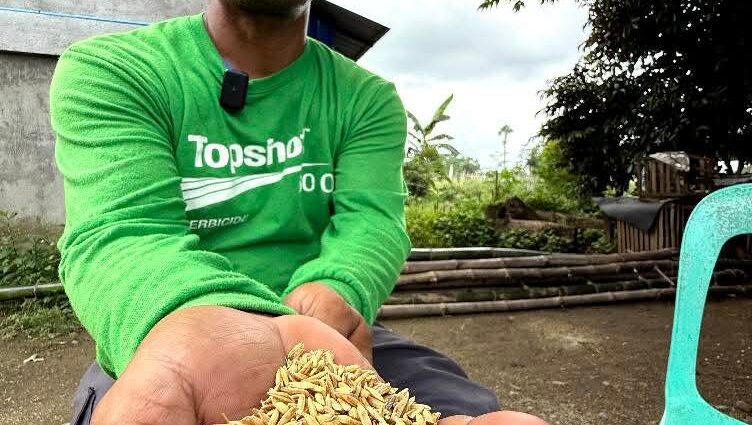
Cabiao, Nueva Ecija — Farmers in Barangay Santa Isabel are raising the alarm over the steep drop in palay prices, now being bought for as low as ₱6 per kilo, a rate they say is unsustainable and pushing them toward financial ruin.
One of the affected farmers, Edwin Galang, who cultivates 15 hectares of farmland, said he recently sold over 800 sacks of palay at near-break-even prices.
He pointed to the oversupply of imported rice as a key factor, saying it has filled local traders’ warehouses and severely depressed the buying price of local harvests.
“We’re barely making ends meet. Sometimes we’re even operating at a loss,” Galang said.
He also stressed that while production costs continue to rise, farmers are left with shrinking profit margins — or none at all.
Veteran farmer Norberto Castro, with nearly 40 years of experience in farming, shared that he could no longer afford to have his harvest dried commercially due to the high operational costs.
As an alternative, he has begun drying the palay in his backyard and has chosen to delay selling altogether.
“It’s heartbreaking to sell at this price. After months of labor, it’s just not worth it. I’d rather wait,” Castro said.
Farmers in the area are appealing for government intervention as the drop in palay prices coincides with peak harvest season, typically a time of stable income.
They warn that the unregulated influx of imported rice continues to undercut local demand, putting immense pressure on small-scale producers.
Nueva Ecija, widely known as the “rice granary of the Philippines,” has been a vital contributor to the nation’s food security.
However, with falling farmgate prices and escalating production costs, farmers are increasingly concerned about the viability of their livelihoods.
They are calling on the government for urgent support, including the implementation of price protection mechanisms, enhanced procurement programs through the National Food Authority (NFA), and stricter regulation of rice imports, to safeguard local agriculture and ensure the country’s long-term food self-sufficiency. (Photo courtesy: Paolo Gee Santos)