
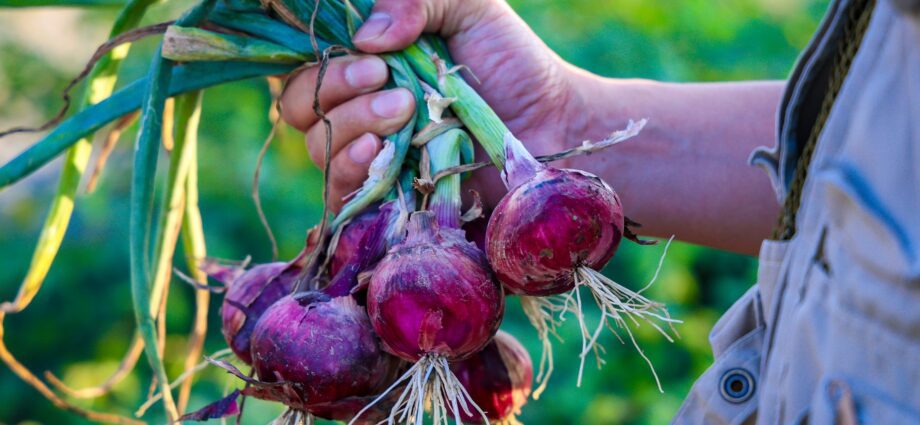
State-run Food Terminal Inc. (FTI) is ramping up intervention in the onion market, urging private buyers to accelerate procurement in Occidental Mindoro while weighing additional purchases to stabilize farmgate prices and prevent supply shocks.
FTI Sales and Distribution manager Edoard Medalla said that private investors have engaged and procured around 6,000 bags—each averaging 27 kilos—at P32 to P35 per kilo, significantly higher than the prevailing farm gate price of about P22 per kilo. Tacking on logistics cost of roughly P8 a kilo to transport the onion to cold storage facilities in Nueva Ecija, the effective cost is around P40-P43 a kilo.
Average production cost in Mindoro Island is estimated at around P18 to P24 per kilo.
The agency is relying on storage capacity outside Mindoro due to operational constraints. “These are perishable goods, whose quality deteriorates quickly after harvest,” explains Medalla, “This is the first time we entered the onion market in Mindoro, so we have to rely on experts we have engaged in Nueva Ecija to maintain quality.”
In Nueva Ecija, FTI-backed buyers have already procured about 110,000 bags at an average price of around P40 a kilo, utilizing part of the 190,000-bag cold storage capacity secured by the agency.
Still, Medalla acknowledged limits to intervention, with Occidental Mindoro’s output estimated at 3.2 million bags. “We cannot guarantee we would buy all production, but we will try to support prices around P35 a kilo, depending on quality and storage availability,” he said.
The move comes as policymakers try to balance farmer incomes with consumer welfare. Agriculture Secretary Francisco P. Tiu Laurel Jr. said targeted procurement and storage are critical to smoothing price swings without distorting the market.
“We must strike a careful balance—ensuring farmers earn fairly while protecting consumers from price spikes,” Tiu Laurel said. “Strategic buying and storage allow us to support producers during periods of oversupply, while preserving enough buffer to prevent sharp increases in retail prices.”
Even without additional cold storage capacity—and despite existing constraints—onion growers in Mindoro significantly expanded the area planted to the crop, likely encouraged by last year’s strong performance.
From 6,000 hectares in 2025, the planted area rose to 8,637 hectares for this year’s crop season. This expansion is expected to yield an additional 27,000 metric tons of onions—already half of last year’s estimated national shortfall in domestic production. However, the island’s increased output, combined with the crop’s short shelf life outside cold storage, has given traders greater leverage in setting prices.
Even under optimal storage conditions, white onions maintain good quality for only up to four months, while red onions can last about six months before experiencing significant deterioration.
Mindoro currently has eight cold storage facilities, but their combined capacity can accommodate only 16 percent of this year’s projected harvest. Even with the planned addition of a mega cold storage facility by the Department of Agriculture, expected to be operational next year, total storage capacity will still cover only about a quarter of current projected output.
(PHOTO CREDIT: Department of Agriculture)