
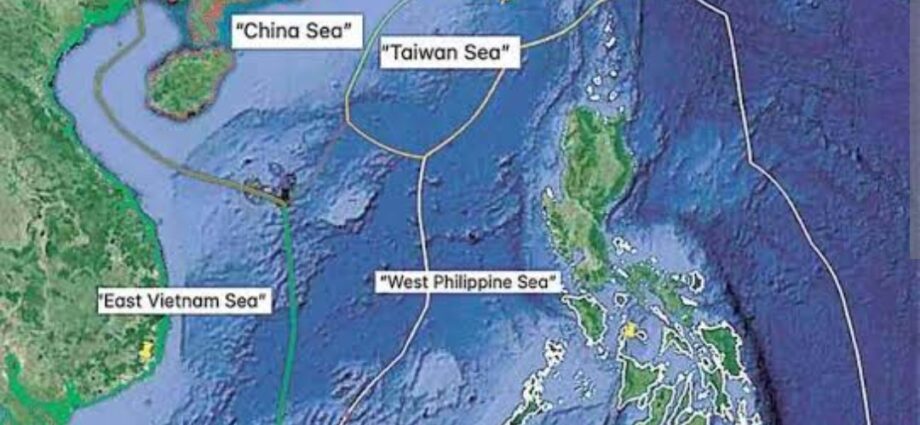
Peru — CHINESE President Xi Jinping warned the United States not to interfere in disputes over the Spratly Islands during a high-level meeting with U.S. President Joe Biden on Nov. 16.
The discussion took place on the sidelines of the 31st Asia-Pacific Economic Cooperation (APEC) Economic Leaders’ Meeting in Lima.
The two leaders’ dialogue, described by the U.S. Embassy in Peru as “candid and constructive,” covered a wide range of bilateral, regional, and global issues, including areas of cooperation and contention. This marked their third meeting, following a telephone call in April.
China’s Firm Stance
According to a statement from China’s Ministry of Foreign Affairs (MFA), Xi reaffirmed Beijing’s unwavering position on its territorial sovereignty and maritime rights in the South China Sea.
“Dialogue and consultation between states concerned is always the best way to manage differences in the South China Sea. The United States should not get involved in bilateral disputes over the relevant islands and reefs of Nansha Qundao, nor should it aid or abet the impulsion to make provocations,” Xi stated, using the Chinese term for the Spratly Islands.
U.S. Emphasizes International Norms
President Biden responded by underscoring the U.S. commitment to upholding international law and ensuring freedom of navigation and overflight in the South China Sea and East China Sea. A U.S. Embassy statement also emphasized Washington’s support for peace and stability in the region.
A Contentious Region
The Spratly Islands are a highly contested chain of reefs, atolls, and islets in the South China Sea. While China claims sovereignty over the entirety of the islands, other claimants, including Vietnam, the Philippines, Malaysia, Brunei, and Taiwan, have overlapping claims. The Philippines’ territorial claim focuses on the Kalayaan Island Group, a portion of the Spratlys.
Xi’s Red Lines
During the meeting, Xi outlined four “red lines” that Beijing views as non-negotiable: Taiwan, democracy and human rights, China’s political system, and the country’s right to development. These issues, he emphasized, are critical to the political foundation of U.S.-China relations.
The meeting highlighted ongoing tensions over the South China Sea, a key geopolitical flashpoint, as well as broader challenges in U.S.-China relations.